Free Chlorine: The Sanitizer
Free chlorine is the active sanitizer available to kill bacteria and algae. In Tucson we aim for the upper end of the normal range during summer because so much is lost to heat and sun between visits.
A reading of zero for even a day gives algae a head start. That is why we test it on every visit and why we adjust the dose to the week ahead rather than to the day we are standing there.
pH: Whether the Chlorine Can Work
pH tells you how acidic or basic the water is. When pH climbs too high, chlorine becomes far less effective even if the reading looks fine. Tucson fill water tends to push pH upward, so we are adding acid on most visits.
High pH is also what makes water feel harsh on skin and eyes and leaves cloudy scale on tile. Keeping pH in range is the single most common adjustment we make.
Alkalinity, Stabilizer and Calcium
Total alkalinity is the buffer that keeps pH from swinging. Cyanuric acid, the stabilizer, protects chlorine from UV, but too much of it makes chlorine sluggish, which is a real issue in pools that rely on tablets.
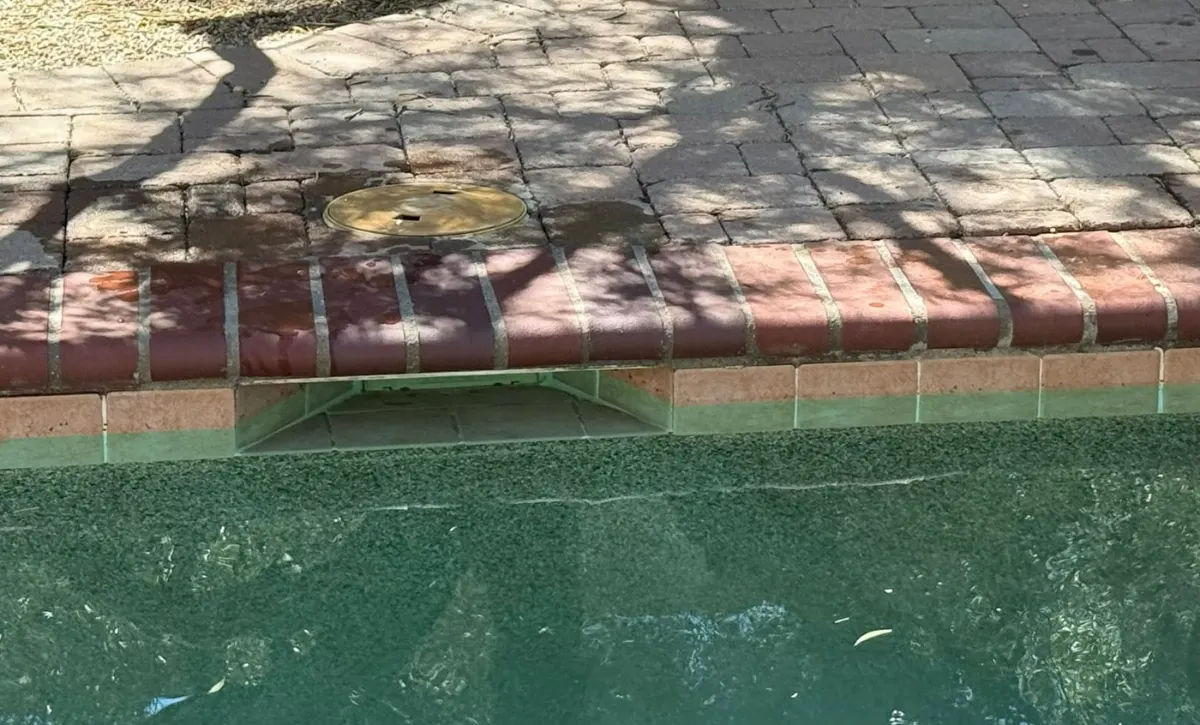
Calcium hardness matters more in Tucson than almost anywhere. Our fill water is already hard, and evaporation concentrates it further. Left alone, high calcium ends up as scale on tile, in salt cells and inside heaters.
What Your Service Report Should Show
After every Blue Dolphin visit you receive an email with the chemistry readings and exactly what was added. Over a few months that becomes a history, and a chemistry history is how you spot a developing problem before it becomes a repair bill.
If your current service cannot tell you what your readings were last week, that is worth asking about.
Key Takeaways
- Free chlorine sanitizes; pH determines whether it can work.
- Tucson fill water pushes pH and calcium upward constantly.
- Too much stabilizer makes chlorine sluggish.
- A chemistry history is your early warning system.