A Salt Pool Is Still a Chlorine Pool
The salt cell generates chlorine from dissolved salt as water passes through it. You still have free chlorine in the water, and it still needs to be in range. The difference is where it comes from.
That means every other chemistry number, pH, alkalinity, stabilizer and calcium, still has to be tested and balanced every week. Owners who assume the cell handles everything are usually the ones calling about a green pool.
What Is Genuinely Better
Salt pools feel softer on skin and eyes and are less prone to the sharp chlorine smell that comes from chloramines in poorly maintained traditional pools. Chlorine output is steady rather than spiking after each tablet or shock.
You are also not storing and handling liquid chlorine or tablets at home, which many families prefer.
What Tucson Makes Harder
Salt cells raise pH as a side effect, and Tucson fill water already pushes pH upward. Expect regular acid additions. Our hard water also scales the cell plates with calcium, which reduces output and eventually kills the cell if it is not cleaned.
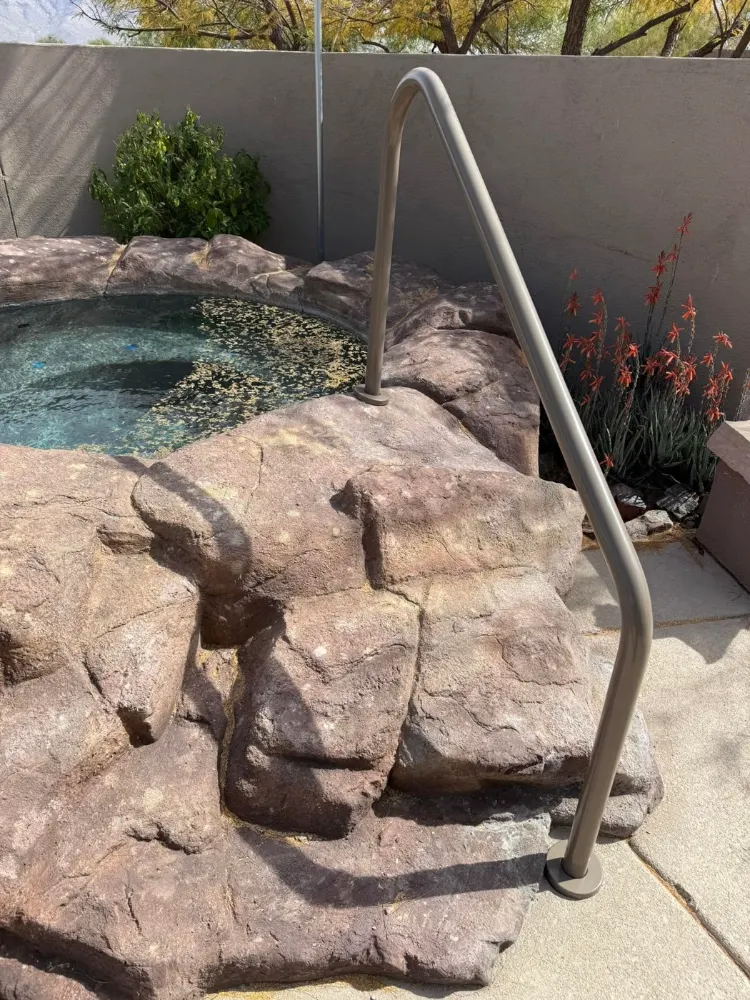
Salt water is corrosive to certain metals and natural stone. Coping, ladders, light rings and equipment need to be compatible, and splash-out areas need rinsing.
What Weekly Salt Service Looks Like
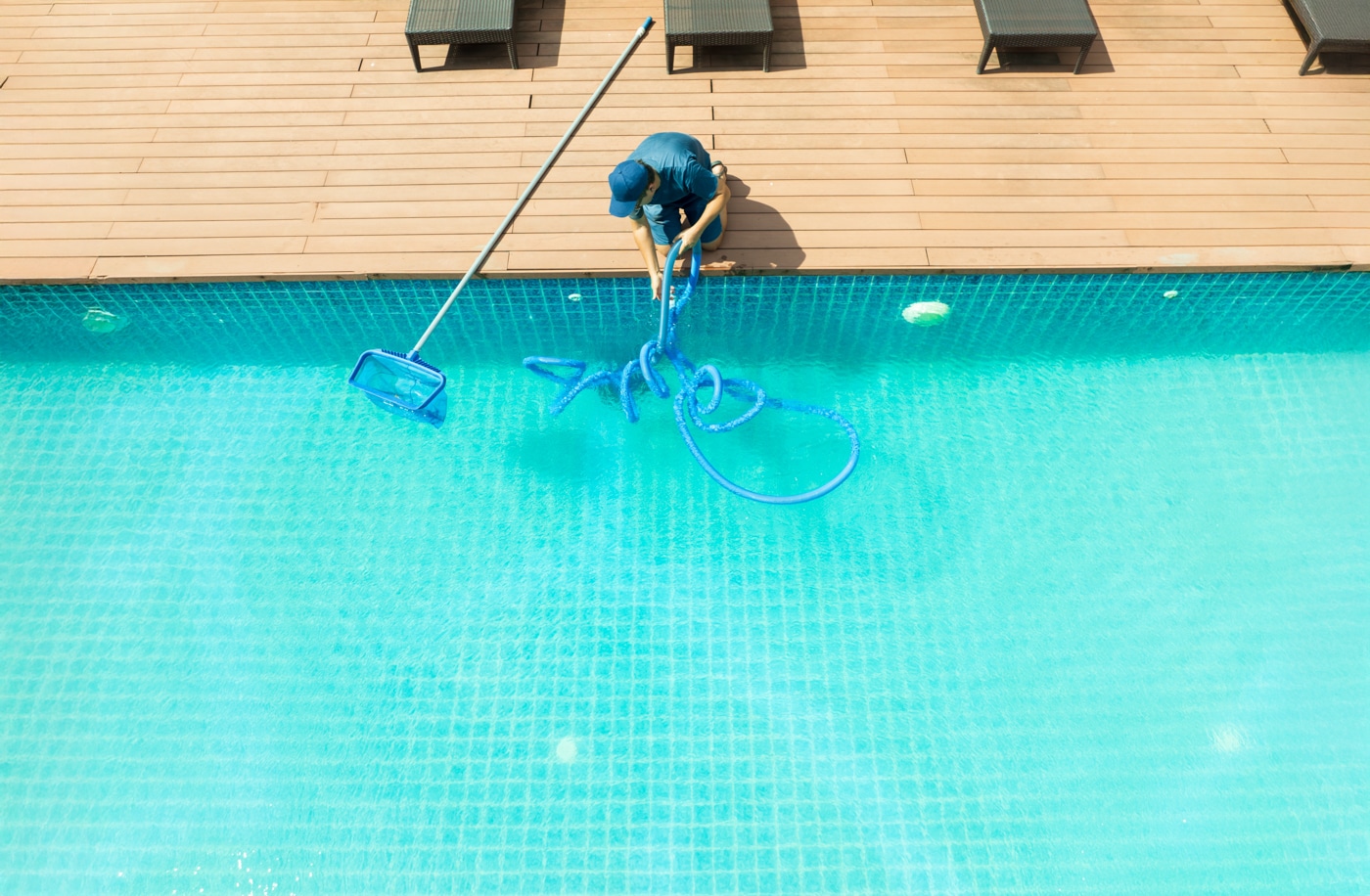
Everything a standard weekly visit includes, plus monitoring salt level, checking the cell output and inspecting the plates for scale. Cells are cleaned when they need it, not on a fixed calendar.
Blue Dolphin Pools maintains saltwater pools across Tucson and installs and replaces salt systems when a cell reaches the end of its life.
Key Takeaways
- Salt pools still need weekly chemistry balancing.
- Softer water and steady chlorine are the real benefits.
- Tucson hard water scales cells and raises pH.
- Cell inspection and cleaning is part of proper salt service.